



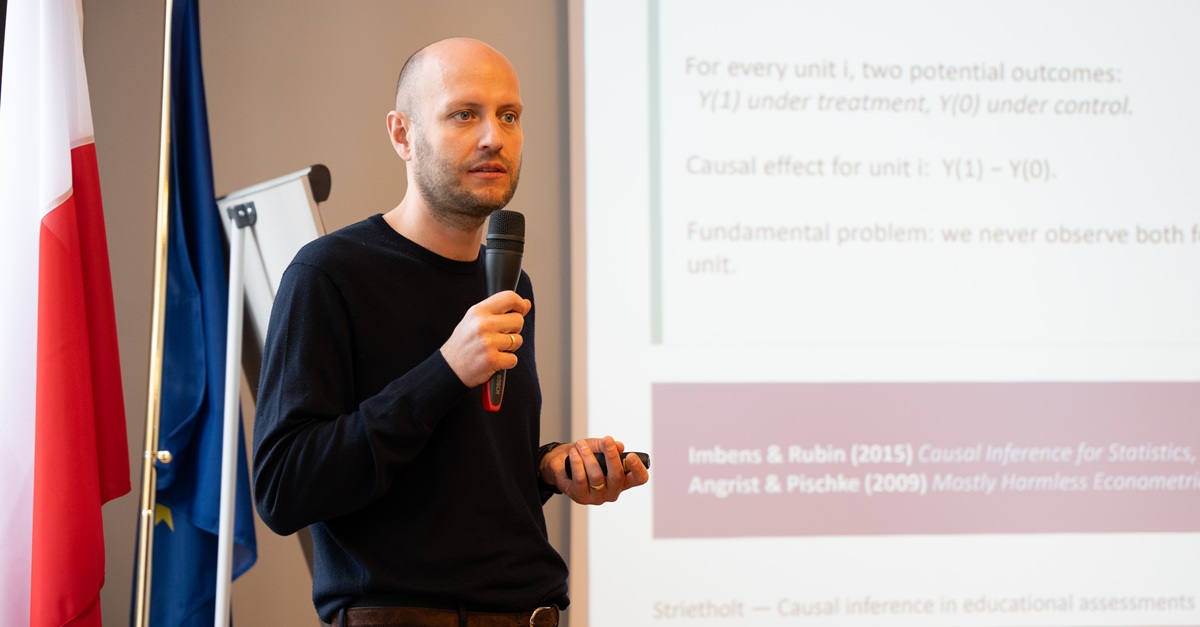
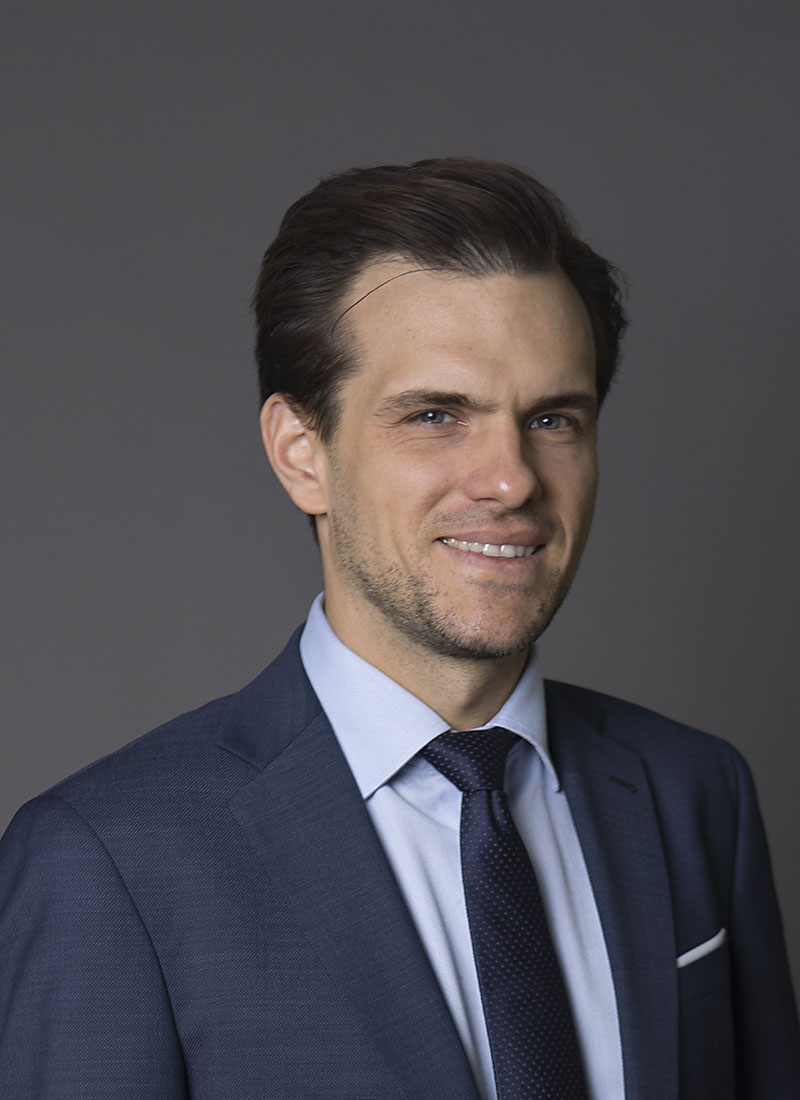
Dr hab.Tomasz Gajderowicz
Deputy Director for Research at the Educational Research Institute, is an experienced researcher in both national and international projects. Affiliated with the Faculty of Economic Sciences at the University of Warsaw, he was also educated abroad, including at the University of Glasgow. His significant research achievements have been recognized with a number of prestigious honours and awards, including the Scholarship of the Minister of Science and Higher Education for outstanding young scientists, the Dekaban-Liddl Scholarship, the "Doctors for Mazovia II" Scholarship and the START Scholarship of the Polish Science Foundation. In addition, he is a practitioner of education, regularly awarded by the Rector of the University of Warsaw for outstanding teaching achievements. He is passionate about promoting research-based teaching methods – in this area he has conducted hundreds of teacher training courses and guest lectures for foreign institutions.
As Director of Research at the Evidence Institute Foundation, he analysed data from international surveys (PISA, TIMSS, PIRLS) and advised governments and international institutions, including the World Bank, UNESCO, ETEC and the European Commission, among others, in the area of education policy.
In his research, he specializes in the implementation of modern microeconometric methods to analyse motivation and choices in education and labour. His publications include innovative methodological approaches to the study of human capital in the economy (especially the green and digital economy), linking the education sector to the labour market.
In addition to his passion for education, he is also an airplane pilot and diving enthusiast.